01Your diabetic foot assessment
A diabetic foot health assessment may include diabetes history, previous foot problems, current medicines and medical care. The podiatrist may examine skin, nails, foot shape and areas of pressure. Circulation and sensation checks may be included when needed.
The clinician can look at your usual footwear and ask about walking, daily activity and how you check your feet. If someone assists with care, their involvement can be discussed with your consent.
Findings should be explained in plain language. Ask what your individual risk factors mean, what changes to watch for and which concerns need medical review. A reassuring appearance alone does not answer every circulation or nerve question.
02Diabetes foot care and ulcer prevention
Depending on assessment, care may involve appropriate nail or skin management, footwear advice and discussion of a daily foot care routine. Recommendations should consider your vision, reach, dexterity and the help available. A routine you cannot carry out needs another approach.
Diabetic foot ulcer prevention includes advice about reducing pressure or injury and recognising changes needing assessment. Equipment or footwear recommendations require individual consideration. Do not cut away callus or use harsh corn treatments without suitable advice, particularly when sensation or circulation is reduced.
Follow up should reflect assessed needs rather than a universal appointment interval. Diabetes management remains coordinated with your medical team. Podiatry does not replace glucose management or treatment of vascular disease.
03When a wound or pressure area needs more care
Podiatry wound care may be relevant within the clinician’s scope, but some wounds require a specialist or hospital service. Infection, poor circulation or a rapidly changing foot can need urgent escalation.
A painless wound can still be serious. Contact a medical professional promptly about broken skin, increasing redness, swelling, heat or discharge. Fever, severe illness or a suddenly cold or discoloured foot requires urgent assessment.
04Podiatry and diabetes nutrition support
A dietitian may help with food and nutrition needs as part of diabetes care. This is a separate assessment with different goals. Foot care and nutrition should connect with the broader medical plan when appropriate.
If footwear is the main difficulty, see footwear and orthotics assessment. Orthoses are not automatically needed simply because someone has diabetes.
05Diabetic foot care at home
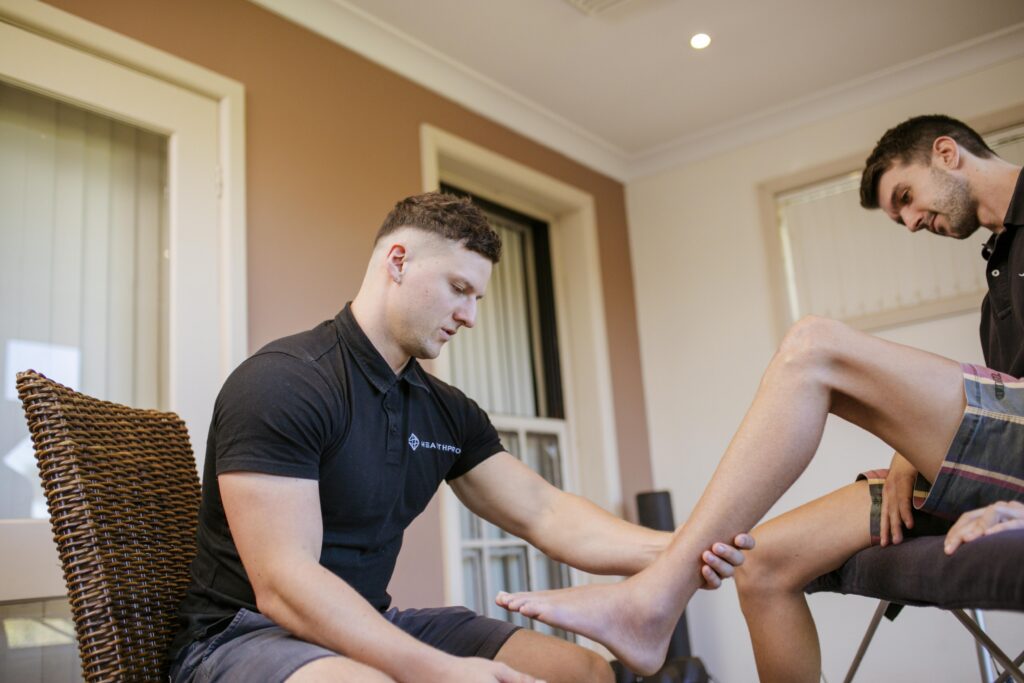
A home podiatry visit lets you show the footwear you normally use and explain how you manage foot care each day. The clinician can discuss difficulties with reaching or seeing your feet in context.
A chosen helper can hear the agreed advice and questions for the wider diabetes care team. The home setting is convenient, while urgent foot changes still need prompt medical assessment.
06Funding and referrals
Medicare-supported podiatry requires the relevant chronic condition management referral and eligibility. Ask about DVA, private health insurance or private payment where applicable. Approved older-person allied health can be discussed through Support at Home or CHSP.
NDIS funding should not be assumed to cover diabetes treatment that belongs to the health system. Disability related support needs require separate consideration. Confirm the consultation, travel and any report fees before the appointment.
You or your chosen referrer can use online referrals to share the care request and relevant information.
07Preparing for the home visit
Have the shoes you wear most often nearby, including slippers or footwear used indoors. Provide relevant reports, a medicine list and details of previous ulcers or foot procedures. Mention existing dressings or treatment plans.
Explain any difficulty seeing, reaching or caring for your feet. If a carer helps, you can choose to involve them. There is no need to hide a problem because you are worried about being judged; the information helps guide appropriate care.






 Corey BiczoManaging Director and Co-FounderRead profile
 Stephen BrushDirector and FounderRead profile
 Amita ChandClinical and Risk ManagerRead profile
 Alana Di MartinoPhysiotherapist with over 10 years' experienceRead profile