01Checking readiness and the recovery context
The exercise physiologist needs to know the procedure, date, complications and current medical instructions. Discharge information, surgical follow up advice and existing rehabilitation plans can help. Any uncertainty about restrictions may need clarification before exercise progresses.
Assessment considers current strength, endurance and functional activity using appropriate tasks. The clinician asks how you respond during activity and afterwards. Pain, fatigue, swelling and other symptoms are relevant to the discussion.
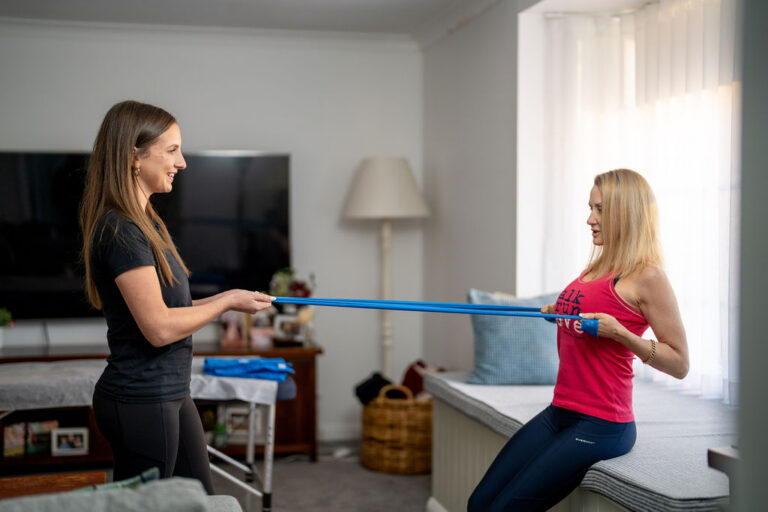
A home appointment can show what equipment and space are available. It can also identify practical barriers, such as difficulty getting onto the floor or needing assistance with transfers.
02Post surgical strength and conditioning
Program options include strength, aerobic or functional exercise selected for your stage of recovery. The clinician should explain the starting level, purpose and review process. Progression is based on your response and medical advice, not a standard weekly increase.
The plan may consider how exercise fits with work, household demands and rest. Doing more in one session is not necessarily useful if it prevents you managing the rest of the day. Discuss what feels manageable.
Review can help identify whether activities should be progressed, adapted or paused. If a problem needs further medical or movement assessment, the exercise physiologist should refer back rather than continue unchanged.
03How this differs from physiotherapy rehabilitation
Post surgical physiotherapy often addresses procedure related movement, transfers, walking and rehabilitation needs. Exercise physiology focuses particularly on clinical exercise and broader conditioning. These roles may overlap.
There is no universal date when care switches from one profession to another. Some people need both, while others need a different rehabilitation setting. Clear coordination helps avoid conflicting exercise instructions.
04Returning to meaningful activity
Tell the clinician what you would like to get back to and what that activity involves. Gardening, shopping and returning to work can have very different physical demands. A specific goal gives the program a useful direction.
The clinician may help break the activity into components that can be assessed and practised appropriately. Returning to sport, heavy work or another demanding task may require further clearance or specialist input. A home program does not automatically establish readiness.
05Why a home visit can be useful
Once your treating team has clarified restrictions, a home appointment can examine how exercise fits around ordinary recovery routines. The clinician can see the space and equipment available for the proposed activities.
You can discuss household demands, rest and the support you have between sessions. This makes the exercise plan practical while medical follow-up and clearance for more demanding activity remain separate responsibilities.
06Funding after surgery
Ask about private health insurance, approved insurer rehabilitation or private payment. Check whether exercise physiology is covered separately from hospital rehabilitation or physiotherapy. Medicare and DVA require the relevant eligibility and referral.
NDIS, Support at Home and CHSP require an eligible support purpose. They should not be assumed to cover routine postoperative rehabilitation. Confirm the assessment, travel, reporting and any gap fees for the proposed appointment before booking.
You or your chosen referrer can use online referrals to share the care request and relevant information.
07Preparing for the first appointment
Provide the surgical instructions and any current exercise plan. Have relevant equipment available and explain what you have already resumed. Tell the team about pain, unusual swelling or other changes since your last medical review.
You do not need to test your limits beforehand. The assessment should identify a starting point and any information that needs clarification. Comfortable clothing and a clear description of your goals are more useful than buying new equipment.
08Knowing when recovery needs review
New calf pain or swelling, concerning wound changes or fever needs prompt medical advice. Chest pain, severe breathlessness or collapse requires emergency help: call 000. Do not treat these as ordinary conditioning symptoms.
Ask the clinician what responses are expected from your particular program and when to stop. Your individual medical instructions remain the guide if they differ from general exercise information.




 Corey BiczoManaging Director and Co-FounderRead profile
 Stephen BrushDirector and FounderRead profile
 Amita ChandClinical and Risk ManagerRead profile
 Alana Di MartinoPhysiotherapist with over 10 years' experienceRead profile