01Checking suitability and current capacity
The exercise physiologist asks about falls, near falls, symptoms and your usual activity. They may review medicines or medical advice relevant to exercise response. Tell them about fainting, dizziness, injury or recent changes in health.
Assessment considers strength, balance, walking tolerance and relevant functional tasks. The clinician selects activities around your safety and the support available. Testing should not involve taking an avoidable risk to show what you can do.
The exercise space also matters. Furniture, flooring, footwear and available assistance affect how a program can be delivered and continued between appointments.
02Building and progressing the exercise routine
An individual program may include selected strength and balance activities, with functional practice where relevant. The exercise physiologist should explain the purpose of each activity, the support needed and how it will be progressed.
A balance activity needs enough challenge to serve its purpose, but that challenge must be suitable for the person. A video or exercise sheet designed for someone else may not provide the right starting point.
Review can look at exercise performance, confidence, daily activity and any falls or near falls. The clinician should adjust the program when it is too easy, too difficult or no longer practical. Exercise cannot guarantee that falls will not occur.
03Exercise physiology or falls physiotherapy?
Falls prevention physiotherapy may be the starting point when walking, transfers or a new movement problem needs assessment and rehabilitation. Exercise physiology gives particular attention to a sustainable clinical exercise and conditioning program.
Both professions can assess and train balance. The distinction depends on your needs and the clinician’s role, rather than a rule that one profession always works first. Coordinated care may be appropriate.
04Looking beyond exercise
Falls can involve medicines, vision, footwear, the environment or medical conditions. Exercise addresses only part of that picture. The exercise physiologist can recommend another assessment if a contributing issue needs attention.
Occupational therapy home safety assessment explores daily tasks and environmental factors. Podiatry may be relevant to foot or footwear concerns. The plan should make those responsibilities clear.
05Why a home visit can be useful
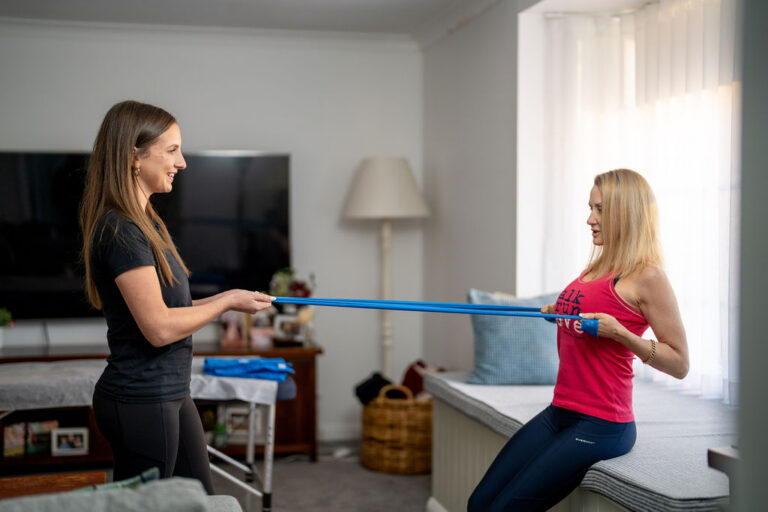
A home appointment gives the exercise physiologist context for the movements and support involved in your daily routine. You can show the space available and explain which activities you want to manage.
The clinician can discuss how assessed strength and balance work fits that setting. A chosen helper can learn the agreed assistance, with supervision requirements explained before practice between appointments.
06Funding and access
Eligible older people can ask about approved exercise physiology through Support at Home or CHSP. Medicare, DVA, private health insurance and private payment have different referral and payment arrangements.
For NDIS participants, the service must address eligible disability related physical capacity needs and fit the plan. A falls concern does not automatically establish funding. Confirm the service, assessment, travel and report costs, with equipment considered separately.
You or your chosen referrer can use online referrals to share the care request and relevant information.
07Before the appointment
Have your usual walking aid and footwear nearby. Explain who assists you and whether someone can participate with your consent. Tell the team about any restrictions or exercises already recommended by another clinician.
You do not need to practise standing balance tasks before the assessment. If you have notes about recent falls or near falls, bring them to the discussion. The clinician can help identify what information is most useful.
08Making exercise realistic over time
A program needs to fit your routine and available support. Discuss the times you feel most able to participate and anything that has made previous programs difficult. The clinician can consider ways to make the plan more manageable.
If you become unwell or notice a change in balance, seek advice before continuing unchanged. The plan should explain when to pause and when medical assessment is needed.






 Corey BiczoManaging Director and Co-FounderRead profile
 Stephen BrushDirector and FounderRead profile
 Amita ChandClinical and Risk ManagerRead profile
 Alana Di MartinoPhysiotherapist with over 10 years' experienceRead profile